
Proof of Onward Travel: 50+ Countries That Check (2026)
Across 50+ countries ranked by strictness, immigration officers check for real airline PNR codes. Volward issues verified bookings from $14 in 60 seconds, each confirmable directly with the carrier.
What Counts as Proof of Onward Travel?
Before diving into specific countries, it helps to know what immigration officers and airlines actually accept as valid proof.
Proof of onward travel is documentation showing you have a confirmed plan to leave a country before your permitted stay expires. The following qualify in most cases:
- Flight ticket or reservation — the most universally accepted form. A confirmed booking with a PNR that can be verified in the airline’s system.
- Bus ticket — accepted at some land borders, especially in Central America. The ticket must show a specific date and destination outside the country.
- Train ticket — less common, but valid when crossing between countries that share rail networks (e.g., within the Schengen Area).
- Ferry ticket — accepted in island nations and coastal countries where ferry routes serve as international transport.
- Cruise itinerary — some immigration posts accept a confirmed cruise booking as proof of departure.
What does NOT count: a hotel booking in another country, a vague "I plan to take a bus" statement, or a screenshot of flight prices. Immigration wants a confirmed, dated reservation with your name on it.
If you already know what proof of onward travel is and want to understand the concept in depth, read our guide on what a dummy ticket is and how it works.

What Counts as Valid Proof: Accepted vs Rejected Documents
Immigration officers only accept documents with a live booking code, rejecting anything that looks fabricated or incomplete. You must present a reservation that agents can look up directly in the airline database. Border control systems are highly advanced today, meaning a quick glance at a piece of paper rarely satisfies an agent.
Many travelers try to cheat the system with fake papers, but border control technology easily spots these attempts. A simple visual check is no longer enough at modern airport terminals. Officers will type your confirmation number into their portal to see if the flight actually exists under your name.
| Accepted Documents | Rejected Documents |
|---|---|
| Volward verifiable PNR | Google Flights screenshot |
| Confirmed refundable ticket | Photoshop PDF without PNR |
| Airline e-ticket | Local bus ticket (for island nations) |
| Official cruise itinerary | Hotel reservation only |
Real border incidents show exactly how strict this gets when you carry the wrong paperwork. In Bali, authorities regularly reject travelers who present forged return flights. Philippine Airlines recently denied boarding to passengers who only had unconfirmed email screenshots. At the Costa Rica border, officials turned away backpackers who tried to use a hotel booking as proof of departure. A fourth case in Panama involved heavily fined airlines after they let passengers board with fake PDF tickets.
You can completely avoid these stressful rejections by using a legitimate service. We provide a real reservation with verifiable PNR, $14, delivered in 60 seconds directly to your inbox. Get your secure ticket now to pass any border check smoothly. This avoids the need to buy an expensive last-minute flight at the counter.
Which countries require proof of onward travel in 2026?
More than 50 countries require proof of onward travel in 2026, including major hubs like the Philippines, Costa Rica, New Zealand, and the United Arab Emirates. We know how stressful border checks can be when you travel on a one-way ticket.
According to the International Air Transport Association, a significant share of border denials stem from missing documentation like return flights. You must prepare your documents before reaching the airport.
- Strict enforcers: Philippines, Panama, Costa Rica, and the UAE.
- Moderate checkers: Thailand, Vietnam, and the United Kingdom.
- Visa-dependent: Schengen Area nations and Australia.
- Rarely enforced: Mexico, Argentina, and Cambodia.
You can secure a real reservation with verifiable PNR for $14, delivered in 60 seconds, directly through our platform. Get your ticket now to fly with peace of mind.
Countries That Tightened Enforcement in 2026
Several nations have drastically increased their border checks in 2026, making onward travel proof absolutely non-negotiable. Governments are upgrading their digital immigration systems to catch one-way travelers before they even board their flights. This global shift means old travel hacks no longer work for digital nomads.
Colombia now mandates the CheckMig system for everyone, which cross-references your exit flights automatically. Thailand launched a massive crackdown on visa runs, forcing airlines to verify return tickets at the gate. The Philippines implemented a triple check protocol, meaning you show your documents at check-in, at the boarding gate, and again at immigration. Australia uses its ETA system with automated scans that flag visitors lacking a departure itinerary. Panama reinforced controls at Tocumen International Airport, stopping transit passengers who try to enter the city without an onward journey.
| Country | Date of Change | Enforcement Level (1-5) |
|---|---|---|
| Colombia | Since 2024 | Level 4 |
| Thailand | Since 2025 | Level 4 |
| Philippines | Since 2023 | Level 5 |
| Australia | Since 2024 | Level 3 |
| Panama | Since 2025 | Level 4 |
These new policies target long-term visitors who frequently overstay their tourist visas. Immigration departments share data directly with airlines to prevent undocumented arrivals. If you fail these new digital checks, you will not get past the first airport security barrier.
Staying updated on these rule changes is vital for anyone planning a multi-country trip. You must prepare your exit strategy in advance to avoid heavy fines or immediate deportation. Immigration officers expect documented proof, not verbal assurances.
Strictest Countries Ranked: Where You'll Get Stopped
You will face different levels of scrutiny depending on your destination. Some nations demand absolute proof before you board, while others rarely ask. According to the US Department of State, over 50 global destinations require a confirmed return ticket for entry. We categorized these destinations by their strictness level to help you plan your route.
A real reservation with verifiable PNR, $14, delivered in 60 seconds solves this problem instantly. Get your ticket here to bypass these strict checks smoothly. You avoid the stress of buying an expensive flight at the check-in desk. This simple step keeps your travel budget intact.
| Country | Enforcement Level | Notes |
|---|---|---|
| Philippines | 5/5 (Strictest) | Mandatory at check-in and arrival |
| New Zealand | 5/5 (Strictest) | NZeTA requires onward travel |
| Australia | 4/5 (Strict) | Airlines enforce heavily |
| Maldives | 4/5 (Strict) | Checked upon arrival |
| Panama | 4/5 (Strict) | Mandatory for transit and entry |
| UAE | 4/5 (Strict) | Dubai airlines strictly enforce |
| Thailand | 3/5 (Moderate) | Spot checks at boarding |
| Colombia | 3/5 (Moderate) | CheckMig system tracks exits |
| Turkey | 3/5 (Moderate) | Occasional airline checks |
| Malaysia | 3/5 (Moderate) | Hit-or-miss at immigration |
| Sri Lanka | 3/5 (Moderate) | ETA requires return ticket |
| Cambodia | 2/5 (Relaxed) | Rarely enforced in practice |
Travelers are regularly denied boarding when flying into 5/5 strict countries. Officers in New Zealand and the Philippines scan your barcode to ensure the flight exists. You must carry a valid booking to enter these territories. Airlines face heavy fines if they let you board without proper documents.
Destinations rated 4/5 like Australia and the UAE rely heavily on airline staff to enforce their border policies. Gate agents will ask for your departure itinerary before printing your boarding pass. If you fly into a 3/5 country like Turkey or Malaysia, the checks happen randomly. You might walk right through immigration, or you might get pulled aside for questioning.
Even relaxed 2/5 countries like Cambodia can surprise you depending on the border agent's mood. You should never assume a border is completely open just because you read an outdated forum post. Immigration policies shift rapidly, and holding a confirmed departure flight remains your best defense against entry denial.
Island nations enforce these rules much more strictly than countries with large land borders. The Maldives and Sri Lanka leave you with no overland escape routes, making a departure flight absolutely mandatory. You cannot argue your way out of this requirement when dealing with island immigration authorities. They expect to see a specific flight number and departure date printed on your itinerary.
Southeast Asia
Southeast Asia is where most backpackers first encounter onward travel enforcement. The region draws millions of one-way travelers every year, and immigration agencies know it.
Thailand
Required: Yes
Enforcement: High
What they accept: Flight reservation, bus ticket to a neighboring country
Thai immigration has asked for proof of onward travel for years, but enforcement used to be inconsistent. That changed. Airlines flying into Bangkok, Chiang Mai, and Phuket now check at departure — before you even board the plane. Budget carriers like AirAsia, Scoot, and Nok Air are the strictest.
If you arrive without proof, immigration officers at Suvarnabhumi and Don Mueang may ask to see an exit ticket. They rarely deny entry outright, but they can. The risk increases on one-way tickets.
Practical tip: a bus ticket from Bangkok to Phnom Penh or Vientiane also works. But flights are easier to verify.
Philippines
Required: Yes
Enforcement: Very high
What they accept: Flight reservation only
The Philippines is the strictest country in Southeast Asia for onward travel. The Bureau of Immigration asks almost every foreign arrival for a return or onward ticket. This applies regardless of nationality and regardless of visa type.
Airlines enforce this aggressively at check-in. If you cannot show a flight leaving the Philippines, many carriers will refuse boarding. This catches people off guard. It is not a "maybe" situation — it is routine.
Bus or ferry tickets to neighboring countries do not apply here because the Philippines is an archipelago with no land borders.
Indonesia (Bali)
Required: Yes
Enforcement: High
What they accept: Flight reservation, ferry ticket to Timor-Leste or Malaysia
Indonesia requires proof of onward travel for both visa-free entry (30 days) and visa-on-arrival (30 days, extendable). Bali’s Ngurah Rai airport is the primary enforcement point.
In practice, immigration at Bali checks more consistently than at Jakarta or Surabaya. Airlines departing to Bali from Singapore, Kuala Lumpur, and Australian cities almost always check before boarding.
If you plan to travel overland through Indonesia, a domestic flight from Bali to Jakarta does not count — it must be a flight out of Indonesia.
Vietnam
Required: Yes (for visa-exempt entries)
Enforcement: Moderate
What they accept: Flight reservation
Vietnam grants visa-free stays of 45 days to many nationalities. When entering visa-free, airlines sometimes ask for proof of onward travel at check-in. Immigration at Tan Son Nhat and Noi Bai airports may also ask, though enforcement is less systematic than in the Philippines or Thailand.
If you hold an e-visa or embassy-issued visa, the check is rarer. But on a visa exemption with a one-way ticket, expect to be asked.
Malaysia
Required: Yes
Enforcement: Moderate
What they accept: Flight reservation, bus ticket to Singapore or Thailand
Malaysia grants visa-free stays of 90 days to most Western nationalities. Immigration officers at KLIA occasionally ask for proof of exit, especially for travelers arriving on one-way flights from countries with high overstay rates.
In practice, enforcement is hit-or-miss. But airlines departing to Malaysia do sometimes check, particularly low-cost carriers. A bus ticket from Johor Bahru to Singapore is accepted if you fly into southern Malaysia.
Cambodia
Required: Officially yes
Enforcement: Low
What they accept: Flight reservation, bus ticket
Cambodia technically requires proof of onward travel, but Phnom Penh and Siem Reap airports rarely enforce it. The visa-on-arrival process is straightforward and officers focus more on the fee than your exit plans. Airlines occasionally ask at departure, but it is uncommon.
Myanmar
Required: Yes
Enforcement: Moderate
What they accept: Flight reservation
Myanmar requires a return or onward ticket for tourist visa holders. Enforcement depends on the point of entry. Yangon airport officers sometimes check. Airlines are more likely to ask at check-in. Given the limited overland border crossings open to tourists, a flight out is the practical option.
Vietnam and Thailand entry requirements proof of onward ticket 2026
Vietnam entry requirements proof of onward ticket 2026 mandates a confirmed exit flight for all visa-exempt travelers, while Thailand now strictly enforces this rule at boarding gates. You will likely face questions from airline staff before you even drop your bags.
Thailand receives tens of millions of international arrivals each year, leading to tighter automated border checks. Border control systems are fully digitized in 2026, meaning agents scan your passport and instantly know if you hold a return flight.
Travelers heading to Hanoi or Ho Chi Minh City face mandatory checks before boarding low-cost carriers. If you plan to cross into Cambodia by bus, be aware that airlines flying into Bangkok or Da Nang often reject land border tickets.
Booking a verifiable flight reservation remains the only guaranteed way to board your flight without stress. We always recommend having a confirmed PNR ready on your phone.
Central and South America
Latin America is a major draw for long-term travelers, digital nomads, and backpackers doing multi-country overland routes. Several countries here enforce onward travel rules firmly.
Costa Rica
Required: Yes
Enforcement: High
What they accept: Flight reservation, bus ticket to Panama or Nicaragua
Costa Rica enforces onward travel consistently. You must show proof of leaving within 90 days. Airlines check at departure, and immigration at Juan Santamaria airport will ask. This is not occasional — it happens to most arrivals on one-way tickets.
A Tica Bus ticket from San Jose to Panama City or Managua is accepted. Some travelers buy a cheap bus ticket at the airport, but this costs more than getting a flight reservation in advance.
Colombia
Required: Yes
Enforcement: High
What they accept: Flight reservation
Colombia requires proof that you will leave within your permitted stay (usually 90 days, extendable to 180). Bogota’s El Dorado airport and Cartagena both enforce this. Airlines departing to Colombia check at the gate.
Overland exits exist (to Ecuador, Peru, Venezuela, Panama via boat), but immigration expects a flight reservation. A bus ticket to Ecuador from a Colombian border town is unlikely to satisfy an officer at Bogota airport.
Peru
Required: Sometimes
Enforcement: Low to moderate
What they accept: Flight reservation, bus ticket
Peru does not enforce onward travel as strictly as Costa Rica or Colombia. Immigration at Lima’s Jorge Chavez airport rarely asks. Airlines, however, sometimes check at the departure city, especially on flights originating from the US or Europe.
If you are entering overland from Bolivia or Ecuador, the question almost never comes up.
Brazil
Required: Sometimes
Enforcement: Low
What they accept: Flight reservation
Brazil’s immigration is generally relaxed about onward travel for visa-exempt tourists. The 90-day stay does not usually trigger a demand for exit proof. That said, airlines departing to Brazil occasionally ask at check-in, and it is not worth the gamble on a $900 flight.
Mexico
Required: Sometimes
Enforcement: Low to moderate
What they accept: Flight reservation
Mexico grants 180-day stays to most nationalities, and immigration rarely asks for onward travel proof. The main risk is at the airline check-in counter. Carriers flying from Europe and Asia to Mexico City sometimes request proof, especially if the ticket is one-way.
INM (Mexico’s immigration agency) has the authority to ask, and some officers do. It depends on the officer, the airport, and the day.
Panama
Required: Yes
Enforcement: High
What they accept: Flight reservation, bus ticket to Costa Rica
Panama enforces onward travel proof consistently. Tocumen airport immigration will ask, and airlines check at departure. This catches many travelers coming from Colombia or the US on one-way fares.
A bus ticket to Costa Rica via the Pan-American Highway works. Copa Airlines and other carriers flying into Panama City are strict at check-in.
Ecuador
Required: Sometimes
Enforcement: Low
What they accept: Flight reservation, bus ticket
Ecuador’s 90-day visa-free stay rarely triggers onward travel checks at Quito or Guayaquil airports. Airlines are the more likely checkpoint. The Galapagos have separate requirements (round-trip ticket mandatory to enter the islands).
Argentina
Required: Rarely
Enforcement: Very low
What they accept: Flight reservation
Argentina almost never asks for proof of onward travel. Ezeiza airport immigration focuses on passport validity and visa requirements. Airlines from certain origins may check, but it is uncommon. Still, if you are on a one-way ticket from a non-neighboring country, carrying a reservation removes any small risk.

Oceania
New Zealand
Required: Yes
Enforcement: Moderate to high
What they accept: Flight reservation, evidence of sufficient funds
New Zealand requires visa-waiver travelers to hold evidence of onward travel. Immigration New Zealand can ask at the border, and airlines enforce at check-in. The NZeTA (New Zealand Electronic Travel Authority) terms state that travelers should be prepared to demonstrate they will leave within their permitted stay.
New Zealand also accepts evidence of financial means (bank statements, credit cards) as a secondary proof. But a confirmed flight reservation avoids the conversation entirely.
Australia
Required: Yes (for certain visa types)
Enforcement: Moderate
What they accept: Flight reservation
Australia’s ETA (Electronic Travel Authority) and eVisitor visa conditions state travelers should have a return or onward ticket. In practice, Australian Border Force officers at Sydney, Melbourne, and other airports do not ask every arrival. But airlines departing to Australia — particularly from Southeast Asia — enforce this at check-in.
Working Holiday Visa holders are generally exempt from onward travel requirements since the visa allows longer stays.
Europe (Schengen Area)
Required: Yes (for visa applications); sometimes at the border
Enforcement: High at embassy stage; variable at border
The Schengen Area operates differently from most destinations. For citizens of visa-required countries, onward travel proof is mandatory during the visa application process. Every Schengen consulate asks for a confirmed flight reservation as part of the application file.
Consulates specifically advise applicants not to buy non-refundable tickets before the visa is issued. A temporary flight reservation — often called a "dummy ticket" — is the standard approach.
At the border itself (arriving at a Schengen airport), officers may ask visa-exempt travelers for proof of exit, especially for stays approaching 90 days. This is more common at airports in France, Germany, and the Netherlands.
Strictest Schengen consulates for onward travel documentation: France, Germany, Italy, Spain, and the Netherlands. These embassies scrutinize the full itinerary including internal flights and onward travel proof.

Other Regions
United Kingdom
Required: Yes
Enforcement: Moderate
What they accept: Flight reservation
UK Border Force may ask non-visa-exempt travelers (and sometimes visa-exempt ones) for evidence of onward travel. Airlines enforce at check-in, especially for passengers originating from outside Europe.
Standard Visitor Visa applicants must include travel plans in their application. Having a confirmed reservation strengthens the file.
United States (ESTA / Visa Waiver Program)
Required: Yes
Enforcement: Moderate
What they accept: Flight reservation
ESTA travelers are expected to have a return or onward ticket. Airlines enforce this more than CBP (Customs and Border Protection) officers do. If you book a one-way flight to the US under the Visa Waiver Program, the airline may refuse boarding without proof of exit.
CBP officers at US airports can ask, but they focus more on the purpose of visit and ties to the home country. The airline gate is where the real enforcement happens.
Japan
Required: Sometimes
Enforcement: Low
What they accept: Flight reservation
Japan grants visa-free stays of 90 days to many nationalities. Immigration at Narita and Haneda airports rarely asks for onward travel proof directly. Airlines, however, do check at departure — particularly on one-way tickets from Southeast Asian cities.
Japanese immigration is efficient and focuses on documentation completeness. Having a reservation avoids any delay.
South Korea
Required: Sometimes
Enforcement: Low to moderate
What they accept: Flight reservation
South Korea’s K-ETA (Korea Electronic Travel Authorization) program does not explicitly require onward travel proof. But airlines flying to Incheon occasionally ask, and immigration officers have the authority to request it. The risk is low but not zero.
United Arab Emirates
Required: Yes
Enforcement: High
What they accept: Flight reservation
The UAE, and Dubai in particular, enforces onward travel proof. Emirates, Etihad, and flydubai check at departure. Dubai immigration can ask on arrival. Given that many travelers transit through Dubai, having a confirmed onward flight is standard practice.
South Africa
Required: Yes
Enforcement: Moderate
What they accept: Flight reservation
South Africa requires proof of return or onward travel for most visitors. OR Tambo airport immigration asks, especially for travelers arriving from other African countries or on one-way tickets. Airlines enforce at departure.
Complete Country Comparison Table
| Country | Required? | Enforcement | Accepted Proof | Notes |
|---|---|---|---|---|
| Thailand | Yes | High | Flight, bus ticket | Airlines check before boarding |
| Philippines | Yes | Very high | Flight only | Asked at check-in AND immigration |
| Indonesia | Yes | High | Flight, ferry | Bali is the strictest entry point |
| Vietnam | Yes (visa-exempt) | Moderate | Flight | Less strict with e-visa holders |
| Malaysia | Yes | Moderate | Flight, bus ticket | Inconsistent but airlines check |
| Cambodia | Yes (official) | Low | Flight, bus ticket | Rarely enforced in practice |
| Myanmar | Yes | Moderate | Flight | Limited land border options |
| Costa Rica | Yes | High | Flight, bus ticket | Must exit within 90 days |
| Colombia | Yes | High | Flight | Bogota and Cartagena both enforce |
| Peru | Sometimes | Low-moderate | Flight, bus ticket | Airlines more likely to check than immigration |
| Brazil | Sometimes | Low | Flight | Airlines occasionally check |
| Mexico | Sometimes | Low-moderate | Flight | INM has authority but rarely exercises it |
| Panama | Yes | High | Flight, bus ticket | Tocumen airport is strict |
| Ecuador | Sometimes | Low | Flight, bus ticket | Galapagos requires round-trip |
| Argentina | Rarely | Very low | Flight | Almost never asked |
| New Zealand | Yes | Moderate-high | Flight, funds proof | NZeTA requires onward travel evidence |
| Australia | Yes (some visas) | Moderate | Flight | Airlines enforce from SE Asia |
| Schengen Area | Yes (visa apps) | High (embassy) | Flight | Do NOT buy ticket before visa approval |
| United Kingdom | Yes | Moderate | Flight | Border Force may ask on arrival |
| United States | Yes (ESTA) | Moderate | Flight | Airlines enforce more than CBP |
| Japan | Sometimes | Low | Flight | Airlines check at departure city |
| South Korea | Sometimes | Low-moderate | Flight | K-ETA does not require it explicitly |
| UAE | Yes | High | Flight | Dubai airlines strict at check-in |
| South Africa | Yes | Moderate | Flight | OR Tambo immigration asks |
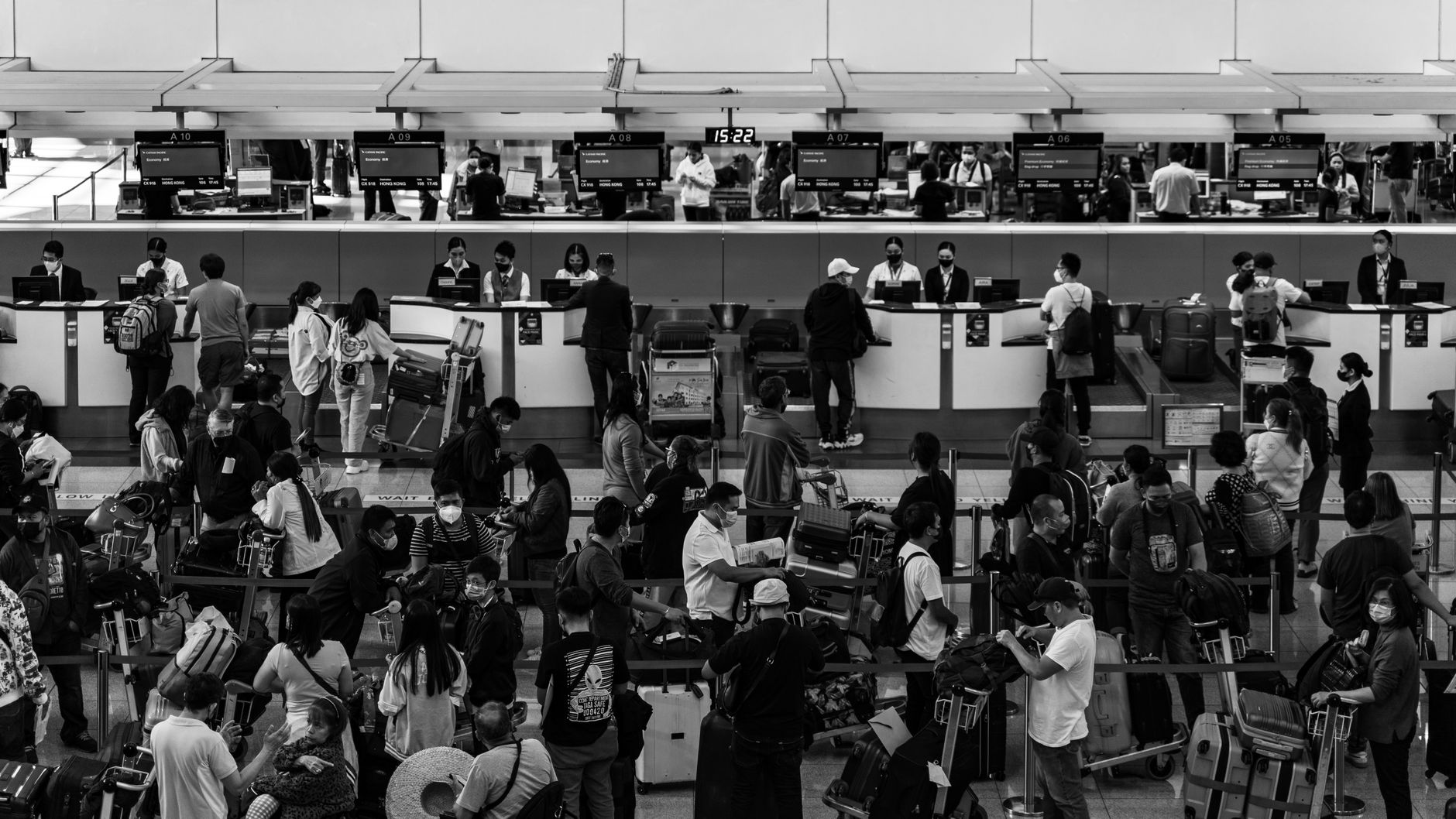
What Happens If You Don’t Have Proof
The consequences range from annoying to trip-ending. Here is what actually happens in practice.
Denied boarding at check-in
This is the most common scenario. The airline agent at the departure airport asks for proof of onward travel. You don’t have it. They refuse to issue a boarding pass. Your options at that point: buy a full-price ticket on the spot (often $300+ for a last-minute one-way), or miss the flight.
Airlines face fines if they transport passengers who get refused entry. That is why check-in staff enforce this — it is their job to filter before the destination country has to.
Questioned at immigration
You made it onto the plane, but the immigration officer at arrival asks to see your onward ticket. If you cannot produce one, the officer decides what happens next. In lenient countries, you get a warning and an instruction to book something. In strict countries like the Philippines, you may be sent to secondary inspection for extended questioning.
Denied entry and sent back
In the worst case, you are refused entry and put on the next flight back to your origin. The airline that brought you in gets fined and may blacklist you. This is rare, but it happens. The Philippines, Costa Rica, and the UAE have documented cases.
Forced to buy a ticket at the airport
Some airports have airline counters where you can buy an exit ticket on the spot. The price is never good. A last-minute one-way from Manila to any destination will run $150-400+. This could have been avoided with a $14 reservation booked from your phone 10 minutes before check-in.
Airline Enforcement Database 2026
Airlines face massive fines for transporting undocumented passengers, pushing them to enforce onward travel rules strictly before boarding. Carriers can face fines of up to $5,000 per violation if a destination country denies you entry. This financial risk explains why check-in agents act like immigration officers.
Based on traveler reports from Reddit, FlyerTalk, and travel forums to rank how different airlines handle these checks. Low-cost carriers consistently rank as the strictest enforcers because they operate on very tight profit margins. Premium airlines tend to be slightly more lenient, though they still follow international regulations.
| Airline | Enforcement Level | Check Stage | Strictest Route |
|---|---|---|---|
| AirAsia | Strict | Online + Desk | Kuala Lumpur to Bali |
| Cebu Pacific | Strict | Check-in + Gate | Manila to Tokyo |
| Ryanair | Strict | Online | London to Madrid |
| Scoot | Strict | Desk | Singapore to Bangkok |
| Jetstar | Strict | Desk | Sydney to Phuket |
| Emirates | Moderate | Desk | Dubai to Manila |
| Qatar Airways | Moderate | Desk | Doha to Jakarta |
| Singapore Airlines | Moderate | Desk | Singapore to Sydney |
| Copa Airlines | Strict | Check-in + Gate | Bogota to Panama City |
| Avianca | Moderate | Desk | Miami to Medellin |
| LATAM | Moderate | Desk | Lima to Santiago |
| Lufthansa | Rare | Gate | Frankfurt to Buenos Aires |
| KLM | Rare | Gate | Amsterdam to Lima |
| Delta | Moderate | Desk | Atlanta to San Jose |
| Qantas | Moderate | Desk | Melbourne to Auckland |
You must understand your specific airline policy before heading to the airport. Agents working for strict carriers will deny your boarding pass if you cannot produce a valid booking code. They will not let you sign a waiver to take the risk yourself.
Knowing this database helps you plan better for your upcoming flights. Always have your documents loaded on your phone before you step up to the counter. Having your documents ready means no stress at the counter.
How to Get Proof of Onward Travel for Under $20
The cheapest and simplest option is a temporary flight reservation — a real airline booking with a verifiable PNR that stays active for 48 hours, then auto-cancels.
Volward creates these reservations through airline GDS systems. The booking is real. The PNR can be checked on the airline’s website. It works for immigration, airline check-in, and visa applications.
- One-way reservation: from $14
- Round-trip reservation: from $21
- Active for 48 hours with a verifiable PNR
- PDF delivered to your email within minutes
You pick the route that matches your travel plans, enter your passenger details, and receive the confirmation. No flight to actually catch. No cancellation to worry about. The booking simply expires.
Get your proof of onward travel here.
For a comparison of onward ticket services, see our dummy ticket comparison page.

Frequently Asked Questions
Do I need proof of onward travel if I have a visa?
In most countries, yes. A visa gives you permission to enter, but immigration can still ask how you plan to leave. The Philippines requires onward travel proof regardless of visa type. Schengen countries require it at the application stage.
Does a bus ticket count as proof of onward travel?
In countries with land borders, sometimes. Costa Rica accepts bus tickets to Panama or Nicaragua. Thailand accepts bus tickets to Cambodia or Laos. Island nations like the Philippines only accept flights. When in doubt, a flight reservation is the safest option.
Can I use a hotel booking in another country as proof?
No. A hotel booking shows where you plan to stay, not how you plan to get there. Immigration wants transport documentation — a flight, bus, train, or ferry ticket with your name and a departure date.
What if my flight reservation expires before I travel?
If you need the reservation for airport check-in or immigration on arrival, it must be active at that moment. A 48-hour reservation works if you book it within two days of your travel date. For visa applications, the reservation only needs to be active when you submit the application.
Do airlines check onward travel for connecting flights?
Airlines check onward travel based on your final destination. If you are transiting through Dubai to reach Bangkok, the airline checks that you can enter Thailand — which means having an exit ticket from Thailand. Transit-only passengers usually do not need onward travel proof for the transit country itself.
Is a refundable flight ticket better than a dummy ticket?
A refundable ticket works, but it ties up $200-800 on your credit card until you cancel. You also have to remember to cancel within the refund window. A temporary reservation at $14 costs less, requires no follow-up, and serves the same purpose.
How do immigration officers verify my reservation?
Officers can check a PNR through airline systems or directly on the airline’s website. A confirmed or held booking shows as valid. The verification takes seconds. This is why a real GDS reservation matters — fake PDFs fail this check immediately.
Which country is the strictest about onward travel?
The Philippines. Immigration officers ask nearly every foreign arrival, airlines refuse boarding without proof, and there are no land-border alternatives since the country is an archipelago. If you are flying to Manila, Cebu, or any Philippine airport on a one-way ticket, treat onward travel proof as mandatory.
How long is a proof of onward travel valid?
Your proof of onward travel is valid as long as the reservation remains active in the airline database. Most temporary bookings last 48 hours, which perfectly covers your check-in and arrival window. Immigration officers only care about the live status at the exact moment you cross the border.
Can I show a bank statement instead of an onward ticket?
No, a bank statement cannot replace a confirmed flight ticket in most countries. While New Zealand might accept proof of funds, nations like the Philippines or Costa Rica strictly demand a travel booking. Officers want to see a concrete departure plan, not just your ability to buy a ticket later.
Do budget airlines check onward travel more than full-service carriers?
Yes, low-cost carriers enforce exit ticket rules much more aggressively than traditional airlines. They operate on tight margins and simply cannot afford the heavy immigration fines associated with denied entry. Carriers like AirAsia or Scoot will almost always ask for your documents at the bag drop. You should never expect leniency when flying with a budget brand.
Can I buy a cheap local bus ticket instead of a flight?
You can only use a bus ticket if the destination country shares a land border and officially accepts overland exits. Island nations like the Philippines or Indonesia will instantly reject a bus reservation because you cannot drive out of the country. Even in Central America, airlines often demand a flight rather than a bus pass to let you board. A confirmed flight remains the only universally accepted proof across all borders.
Can I enter without a return ticket?
You generally cannot enter strict destinations without a return ticket. Border officials require documented proof that you will leave before your visa expires. If you arrive without one, you risk immediate deportation or forced purchase of an expensive flight at the counter. Some travelers attempt to explain their overland travel plans to the officers, but verbal promises hold no weight. You must present a verifiable booking code that agents can look up in their system. Always carry a confirmed reservation to avoid these stressful and costly scenarios at the border.
Do airlines or immigration check?
Both airlines and immigration officers check your travel documents. Airlines perform the first check at the departure gate because they face fines for transporting undocumented passengers. Immigration officers perform the second check upon arrival to verify your visa compliance. You must satisfy both parties to enter your destination successfully. Airline agents are often stricter than border police because the carrier bears the financial cost of flying you back. You will likely face the toughest questions at the check-in desk before you even drop your luggage.
Can I use the same onward ticket for multiple countries?
You can use one onward ticket if it proves your departure from the specific country you are entering. A flight from Thailand to Vietnam works for entering Thailand, but it does not help you enter Vietnam. Each country requires a dedicated exit ticket originating from its own territory. You must book a separate departure flight for every new country on your itinerary. Border agents only care about how you plan to leave their specific jurisdiction. You cannot present a flight departing from a neighboring country to satisfy their entry requirements.

More from Boarding

Denied Boarding: 4 Real Stories (2026)
Turkish Airlines strictly checks onward tickets at Istanbul hub. See 4 real stories of denied boarding and how to pass.

3 Onward Tickets Compared (2026) — From $14
Does Ryanair check your return ticket in 2026? Find out their exact boarding policy and how to avoid a $3,500 fine.

Denied Boarding: 5 Real Stories (2026)
AirAsia is incredibly strict about onward tickets. Learn how to avoid denied boarding with these real traveler stories.
Explore other topics

Onward Ticket China Transit 2026: What Immigration Accepts
Everything you need to know about onward travel, China exit immigration rules, 240h TWOV, and visa bookings in 2026.

Travel Insurance & Onward Ticket 2026: Denied Boarding
Do you need travel insurance and an onward ticket in 2026? Learn the rules to avoid denied boarding at check-in.

How to Cross Costa Rica Panama Border in 2026 — 2 Methods
Navigate the Costa Rica to Panama border at Paso Canoas or Sixaola in 2026 with entry rules and onward ticket tips.