
EES Entry Exit System Europe 2026: What You Need to Know
With the EES system launching in Europe, having verified onward travel documentation matters more than ever. Volward issues real flight reservations from $14 with airline-verifiable PNR codes delivered in 60 seconds.
TL;DR: The EES system launches in April 2026, replacing manual passport stamps with strict biometric border controls. Your 90-day limit will be tracked automatically, making a proof of onward travel essential to avoid being denied boarding.
Let's be real, the romantic era of collecting entry and exit stamps in our passports is coming to an end. When I traveled with my daughter Lena to Greece, she got her first stamp at 3 months old — it was such a sweet travel memory. But starting in 2026, Europe is shifting into the era of absolute digital control with the launch of the Entry/Exit System. The goal is simple: tracking every movement in the Schengen Area down to the minute.
Forget about bending the 90-day rule; the computer won't let anything slide. I've struggled dozens of times with visas and immigration requirements, so I know how stressful a change of this scale can be. Let's get into the details so you know how to clear European customs without getting turned away at your next checkpoint.

What is the EES biometric system?
The EES (Entry/Exit System) is a centralized computer database that records travelers from third countries crossing the EU's external borders. In practice, the machine replaces the customs officer who flips through your passport looking for a blank page. The official launch is set for April 2026, after multiple technical delays. We're talking about a massive investment to equip all airports, ports, and international train stations.
This new device applies to all non-European nationals, whether they need a visa or are totally exempt. If you're coming from Canada, the US, or the UK, you'll have to go through it just like everyone else. Data is kept for 3 years according to official texts (source: Council of the EU), allowing authorities to track your full history. It's a total revolution for managing migration flows in Europe.
The main goal is to quickly identify people who overstay their authorized duration. The EU also wants to fight identity theft and strengthen internal security. The biometric system is designed to be foolproof, with the technological margin of error being near zero.
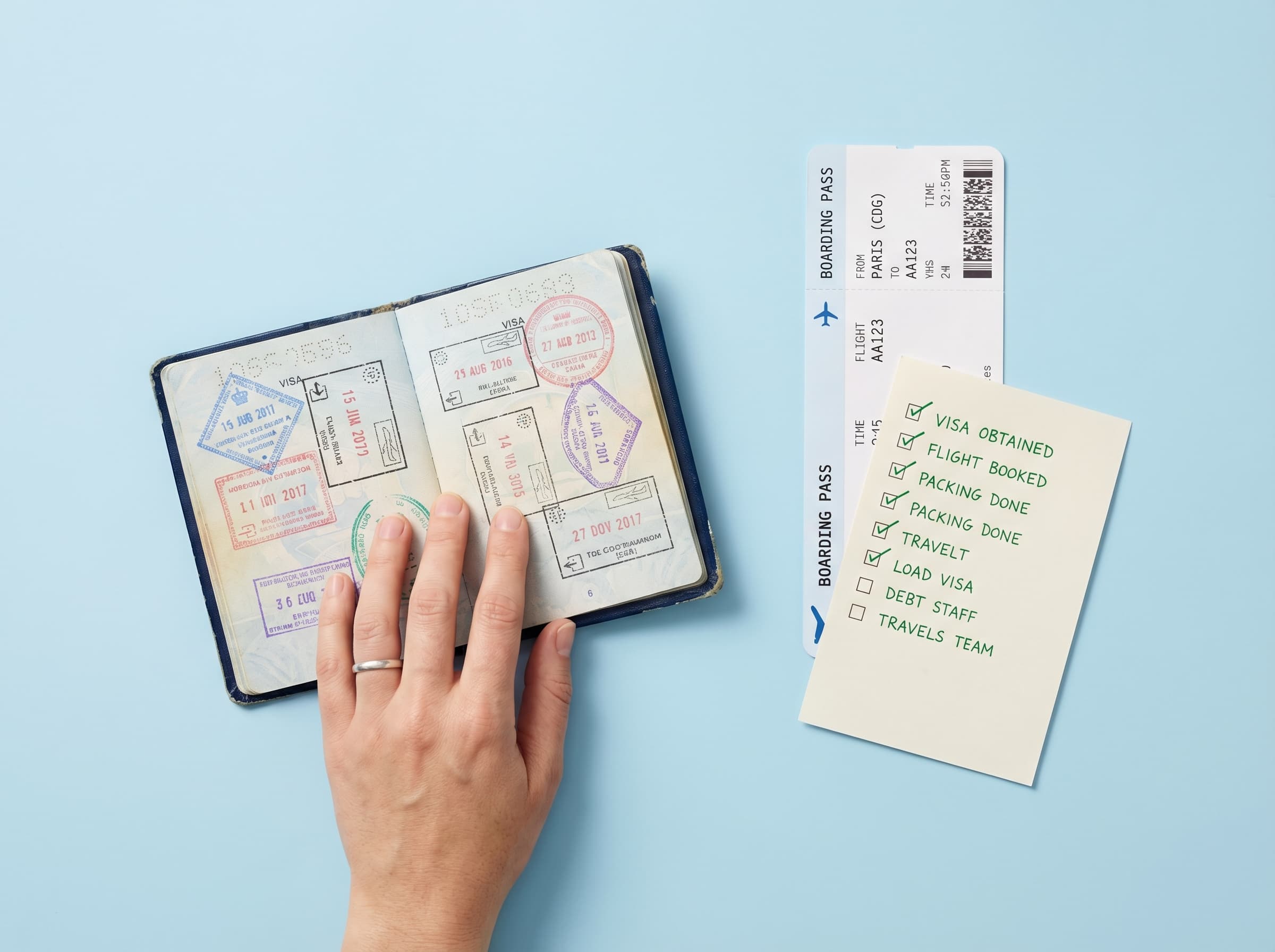
The end of the passport stamp: how does it work?
From your first border crossing under the EES, the agent will collect 4 fingerprints and take a facial photo. This biometric data is then linked to your passport number in a secure central file. On your next trips, you'll be able to use automated gates to scan your face, and the check will take less than a minute. It's faster on paper, but the initial registration might create massive queues at airports.
I remember waiting 4 hours at the Spanish consulate in Lyon for an incomplete file; European administration isn't always known for its speed. With EES, the lack of a physical stamp means you have to keep an ultra-precise count of your days present yourself. Luckily, kiosks will be installed in terminals to check your remaining day balance before you board your flight.
You should know that this system applies to air, land, and sea borders. If you cross the border by car between Serbia and Hungary, you'll have to get out of your vehicle to scan your fingerprints at a dedicated kiosk. Infrastructure is being adapted all over Europe to support this massive data flow.

The 90/180-day rule calculated to the minute
The 90-day calculation over a 180-day period becomes relentless with this new biometric tracking system. Before, a tired customs officer could miss an illegible entry stamp and let you pass without questions. My friend Karim got turned away in Singapore once for a date error; asian immigration doesn't mess around with that. With EES, the European system generates an automatic alert the moment you exceed your quota by even one day.
An overstay now leads to automatic and immediate consequences, like a hefty fine or a multi-year entry ban. That's why airlines will demand Proof of onward travel Before they even let you board. They won't take the financial risk of paying repatriation fees if the machine rejects you upon arrival.
To avoid locking up 800 dollars on a return flight you aren't sure you'll take, Volward offers temporary reservations for a cheap onward ticket. The booking is active for 48 hours and has a real, verifiable PNR code, which immediately reassures the airline at the check-in counter. If your plans change during your trip, you only lose a small amount instead of the exorbitant price of a standard non-refundable ticket.

EES and ETIAS: the 2026 double digital barrier
Don't confuse the EES system with ETIAS, even if both come into effect almost simultaneously in 2026. ETIAS is an online travel authorization you must request before you leave, a bit like the American ESTA. EES is the physical border control system that verifies your biometric identity upon arrival. These are two distinct but totally complementary layers of security.
Both databases communicate in real-time, creating a complete safety net for the Schengen Area. If you want to understand how to prepare for this prior authorization, you can read our complete guide on ETIAS and proof of onward travel in 2026. Europe is locking down its access and aligning with the strictest international security standards.
The ETIAS authorization will cost 7 euros and be valid for 3 years, or until your passport expires. If you don't have this authorization validated before showing up at the airport, the airline will refuse you boarding immediately. The EES system will then take over when you land to confirm you are indeed the authorized person.

The impact of EES on digital nomads and backpackers
The famous visa runs that involved going out for a weekend to Morocco or the UK to reset the clock are dead. The EES system tracks the exact cumulative duration; it's technically impossible to cheat. My friend Nadia missed her Erasmus start in Madrid because of a late visa; she had tried to play with tourist rules before getting her student status validated.
Digital nomads must now look toward specific long-stay visas to remain legally on the continent. You can check our onward ticket guide for digital nomads to understand current document requirements. Total improvisation no longer has a place at European borders; you need a solid file and clear proof of exit.
Backpackers traveling without a fixed itinerary are the most impacted by this new administrative rigor. You can no longer arrive in Europe with a simple one-way ticket hoping to find a cheap flight later. The immigration officer will immediately see on their screen that you don't have a booked onward ticket.

Countries affected by the EES biometric system
The system applies to 29 European countries, covering almost the entire Schengen Area plus a few other associated states. It's crucial to know exactly where your biometric data will be scanned. EU rules are strict about the uniform application of this regulation (source: EUR-Lex).
| Geographic Zone | Countries applying EES | Notable Exceptions | Application Date |
|---|---|---|---|
| Schengen Area (EU) | France, germany, Italy, spain, etc. | Cyprus and Ireland (national systems) | April 2026 |
| Schengen Area (non-EU) | Switzerland, norway, iceland, liechtenstein | No exceptions | April 2026 |
| Non-Schengen EU countries | Bulgaria, romania | Specific controls maintained | April 2026 |
| European Micro-states | Monaco, san Marino, vatican | Included via neighboring countries | April 2026 |
If you're planning a multi-destination trip, every crossing between an EES country and a third country will be recorded in the database. For example, a round trip by train between Paris and London will trigger a full biometric scan at Gare du Nord. The European space is becoming a true interconnected digital fortress.

How to cross the European border in 2026 (step-by-step)
The arrival process will change drastically for non-EU travelers; here are the 4 precise steps waiting for you at the airport. The goal is to streamline traffic in the long run, even if the first few months might be quite chaotic. The Ministry for Europe and Foreign Affairs has published clear guidelines on the subject (source: France Diplomatie).
- Pre-registration: You scan your passport at a self-service kiosk before reaching the physical counter.
- Biometric collection: The kiosk takes a photo of your face and scans 4 fingerprints from your right hand.
- Human verification: A border agent validates your profile on their screen and asks standard questions about your stay.
- Document check: The agent verifies your health insurance and your flight reservation for visa purposes to validate your entry.
A small exception concerns children under 12; they are totally exempt from fingerprinting. When Lena got her passport at 3 months for our trip to Greece, the idea of taking her fingerprints was completely absurd. Only the facial photo will be required for the youngest travelers.
Why proof of onward travel is becoming essential
With a computer system that automatically flags overstays, immigration agents will systematically demand proof of exit from the territory. You can no longer say with a big smile that you'll figure it out when you get there; that excuse doesn't work anymore. You need a real dummy ticket or a confirmed flight to prove you are leaving Europe before the fateful 90th day.
Marc and Julie, a couple of friends, spent 1,200 $ on tickets for 4 people, then the visa was refused by the embassy. To avoid this financial carnage, a temporary reservation is the best possible strategy. With the flexibility option, you can even modify the destination of your exit ticket for immigration if your plans change after crossing the border.
For a family of 4, it comes out to a very small amount for a one-way trip. It's a minimal investment to pass biometric checks without stressing. You receive your PDF ticket by email in 2 to 3 minutes, and you can confidently present yourself to the immigration agent with a complete file. Don't hesitate to order on Volward before your next departure.
Documents required with the EES system
Crossing the border isn't just about a face scan; the document file remains fundamental in 2026. Agents have access to your full history, but they must also validate the material conditions of your current stay. Requirements are clearly listed on the official government portal (source: France-Visas).
- Valid biometric passport: At least 3 months after the planned exit date from European territory.
- Proof of accommodation: A confirmed hotel reservation or an invitation letter signed at the town hall.
- Proof of financial means: About 120 euros per day depending on specific requirements of the country visited.
- Proof of onward travel: A return flight or an international train ticket to a third country.
- Medical insurance: Covering a minimum of 30,000 euros in medical and repatriation costs.
I traveled while 6 months pregnant to Portugal, and I can tell you that the insurance struggle is real if you don't plan ahead. The immigration agent can demand to see your insurance certificate at any time, and the EES system will immediately indicate if you've had unpaid medical issues during a previous European stay.
The impact on Schengen visa applications
The EES system will simplify the work of consulates when reviewing Schengen visa applications, as they will have direct access to your travel history. If you have always respected the deadlines during your previous trips, your file will be processed much faster. On the other hand, the slightest past overstay will automatically block any new tourist visa request.
To build a solid file without risking your own money, you can provide a flight reservation for visa Via Volward services. The embassy can verify the PNR code directly on the airline's website, which proves your good faith. You can even use the "activate later" option, which allows you to trigger the 48-hour reservation just the day before your consular appointment. The activation link remains valid for 30 days, which is super convenient.
My sister struggled for 3 weeks to get a refund for a 780 $ Lufthansa ticket when her Schengen visa was refused last year. That's exactly the kind of situation we want to avoid at all costs. You can check our comparison of dummy flight booking services to see why a verifiable temporary reservation is the most secure solution on the market.
Common mistakes to avoid during biometric checks
The first mistake is thinking the computer system can be fooled by a new, blank passport. Your fingerprints and facial recognition are unique; they will always link you to your old travel history. If you had an entry ban under an old passport, the EES system will instantly block you at the control kiosk.
Another classic mistake is arriving at the airport at the last minute, thinking automated gates will save time. During your very first crossing under the EES regime, registering your 4 fingerprints and photo will take time at the physical counter. It is strongly advised to arrive at least 3 hours before your flight to avoid missing your boarding due to queues.
Finally, never try to present a forged PDF document or a fake flight ticket generated on Photoshop. Immigration agents now cross-reference data with airline systems. If your ticket doesn't have a real, active PNR code, you will be considered a fraudster. Always use an official, verifiable reservation to prove your departure intentions.
What happens if you are denied boarding due to EES?
If you aren't compliant with EES or ETIAS requirements, the airline will refuse you boarding directly at the departure counter. My boyfriend got turned away at immigration in Brazil because he didn't have a return ticket, and I can assure you that the feeling of seeing the plane leave without you is horrible. Airlines are responsible for checking your documents before takeoff.
In case of boarding denial for document reasons, you aren't entitled to any financial compensation. The plane ticket is lost, and you'll have to buy a new flight at your own expense once your situation is regularized. That's why it's crucial to have valid proof of onward travel and an approved ETIAS authorization before even packing your suitcase.
If you find yourself stuck at the airport without proof of exit, you can order a temporary ticket in an emergency. With Volward, you receive your PDF by email in 2 to 3 minutes. It's a minimal investment to unlock the situation immediately in front of the boarding agent. You can see available destinations to choose an exit flight consistent with your itinerary.

FAQ: EES System 2026
Does the EES system replace the Schengen visa?
No, the EES system absolutely does not replace the Schengen visa; they are two totally different things. The visa is a prior authorization you obtain from an embassy to have the right to travel to Europe. EES is only the technological tool used by border police to record your physical crossing on the day of. If your nationality requires a tourist visa, you will still have to put together a complete file with proof of accommodation, insurance, and a flight reservation for visa. The biometric system will simply verify that the person showing up at the counter is indeed the one who obtained the visa legally. Document requirements remain strictly the same, as confirmed by French administration on its official portal (source: Service-Public.fr).
Is my biometric data stored permanently?
No, your biometric data is not kept for life; the standard storage duration is set at 3 years. This period starts from the date of your last recorded exit from European territory. If you return to Europe within this 3-year window, the counter is reset, and your data is kept for 3 new years. The goal is to facilitate frequent trips without having to retake your fingerprints every time. However, if you have committed a serious offense or overstayed your authorized duration, your data can be kept for 5 years to allow authorities to block your future entry attempts. It's a system designed to penalize only travelers who are in violation.
What happens if I refuse to give my fingerprints at the border?
If you refuse to submit to the collection of your biometric data, entry into European territory will be categorically denied. There is no possible exception for personal or ideological reasons. Recording your face and 4 fingerprints is an absolute legal condition to cross the external border of the Schengen Area starting in 2026. The immigration agent will give you an official refusal of entry form, and you will be immediately placed on the next return flight to your country of origin, at your own expense. The only legal exception concerns major physical impossibilities (like a severe hand injury) or children under 12, who are exempt from fingerprinting but must still provide a facial photograph.
Does the EES system apply to European citizens?
No, the EES biometric system does not apply to citizens of the European Union or nationals of the Schengen Area. If you travel with a French, belgian, swiss, or Spanish passport, you will continue to cross borders exactly as before. Your entry and exit movements will not be recorded in this new centralized database. The system exclusively targets third-country nationals, whether they are subject to visa requirements (like Morocco or India) or visa-exempt for short stays (like the US, Canada, or Japan). Long-term residents in Europe who hold a valid residence permit are also exempt from EES registration, as their status is already managed by other national databases.
Is an onward ticket mandatory to pass through EES gates?
Yes, proof of an exit flight is becoming a nearly systematic requirement with the deployment of the EES system. Since the computer calculates your days present to the minute, the immigration agent has strict instructions to verify that you indeed intend to leave the territory before the end of your authorized 90 days. Without a return ticket or a dummy flight booking to a third country, you are considered a high risk for overstaying. That is exactly why Volward offers temporary reservations. You receive a real, verifiable PDF ticket in 2 to 3 minutes, allowing you to pass controls calmly without having to spend hundreds of dollars on a non-refundable plane ticket you might never use.
How does EES calculate the 90-day rule out of 180?
The EES system algorithm automatically calculates your remaining day balance by looking at your entries and exits over the last 180 rolling days. Every day spent in the Schengen Area counts, including the day of arrival and the day of departure. The machine adds up all your recent stays, and if the total reaches 90 days, you must leave the zone. The calculation is dynamic, meaning the 180-day period moves back every day. You can no longer hope that a customs officer makes a mistake in their mental calculations while looking at your old stamps. If you have a doubt about your exact balance, you will be able to check interactive kiosks at airports or use the dedicated online service that will be set up by the European Union.
Do children also have to register in the biometric system?
Yes, children must be registered in the EES system, but with lighter rules for those under 12. All travelers, regardless of age, will have their date and place of crossing recorded in the database. However, children under 12 are totally exempt from fingerprinting. Only a facial photograph will be captured at the counter by the border agent. I have traveled many times with my daughter Lena since she was born, and I know how stressful controls can be with a baby. Luckily, european authorities have planned this exemption to streamline family travel. From age 12, the child will have to provide their 4 fingerprints like a normal adult.
Is the UK affected by this new entry system?
The UK is not part of the Schengen Area, so it does not apply the EES system on its own territory. However, british citizens are directly impacted by this measure when traveling to Europe. Post-Brexit UK has become an administrative nightmare on both sides of the Channel. English tourists will have to scan their fingerprints and face every time they take the Eurostar or ferry to France. Biometric checks will actually be performed directly at the port of Dover or St Pancras station in London, before even crossing the physical border. British authorities fear massive queues during major holiday departures because of this new processing time per passenger.
Can you modify a temporary flight reservation if you are stuck at the border?
Yes, if you are stuck by a picky agent, you can modify your temporary reservation thanks to the flexibility option on Volward. For a small extra fee during your initial order, you get the right to change the dates or destination of your ticket once after purchase. It's extremely useful if the immigration agent demands to see an exit ticket for immigration to a specific country you hadn't thought of. For a solo traveler, the one-way ticket with flexibility is very affordable. You can make the change directly from your mobile phone while waiting at the counter, and you'll receive your new updated PDF ticket in minutes to present to the control authorities.
More from Transit & Layovers

Dubai Layover Rules 2026: Avoid Denied Boarding
Discover the 2026 transit rules for Dubai and the UAE. Learn when you need an onward ticket and how to avoid boarding denials.

Transit Zone Rules 2026: How to Leave the Airport
Stuck on a long layover? Learn how to leave the transit zone in Dubai, Singapore, Doha, or Istanbul safely with the right documents.

Dummy Ticket Singapore Transit 2026: What You Must Know
Stuck at Changi? Don't get denied boarding. Learn why a dummy ticket for your Singapore transit is the safest way to prove onward travel.
Explore other topics

Myanmar Entry Rules 2026: Avoid Denied Boarding
Get the essential Myanmar entry rules, e-visa steps, safety updates, and exit ticket tips to avoid boarding issues.

Denied Boarding on Qatar Airways: 4 Real Stories (2026)
Qatar Airways strictly checks return tickets via Timatic. Learn how Doha transit and HAYYA visa rules work in 2026.

Onward Ticket China Transit 2026: What Immigration Accepts
Everything you need to know about onward travel, China exit immigration rules, 240h TWOV, and visa bookings in 2026.